Aircraft carriers · Battle of Midway
USS Yorktown: Who Was Still Aboard When Her Captain Reported No One Was
On 4 June 1942 her captain abandoned a carrier he believed would capsize in minutes. She stayed afloat for about 62 hours. Two wounded men were still inside her, and she now stands upright three miles down, with a Navy car on her hangar deck.
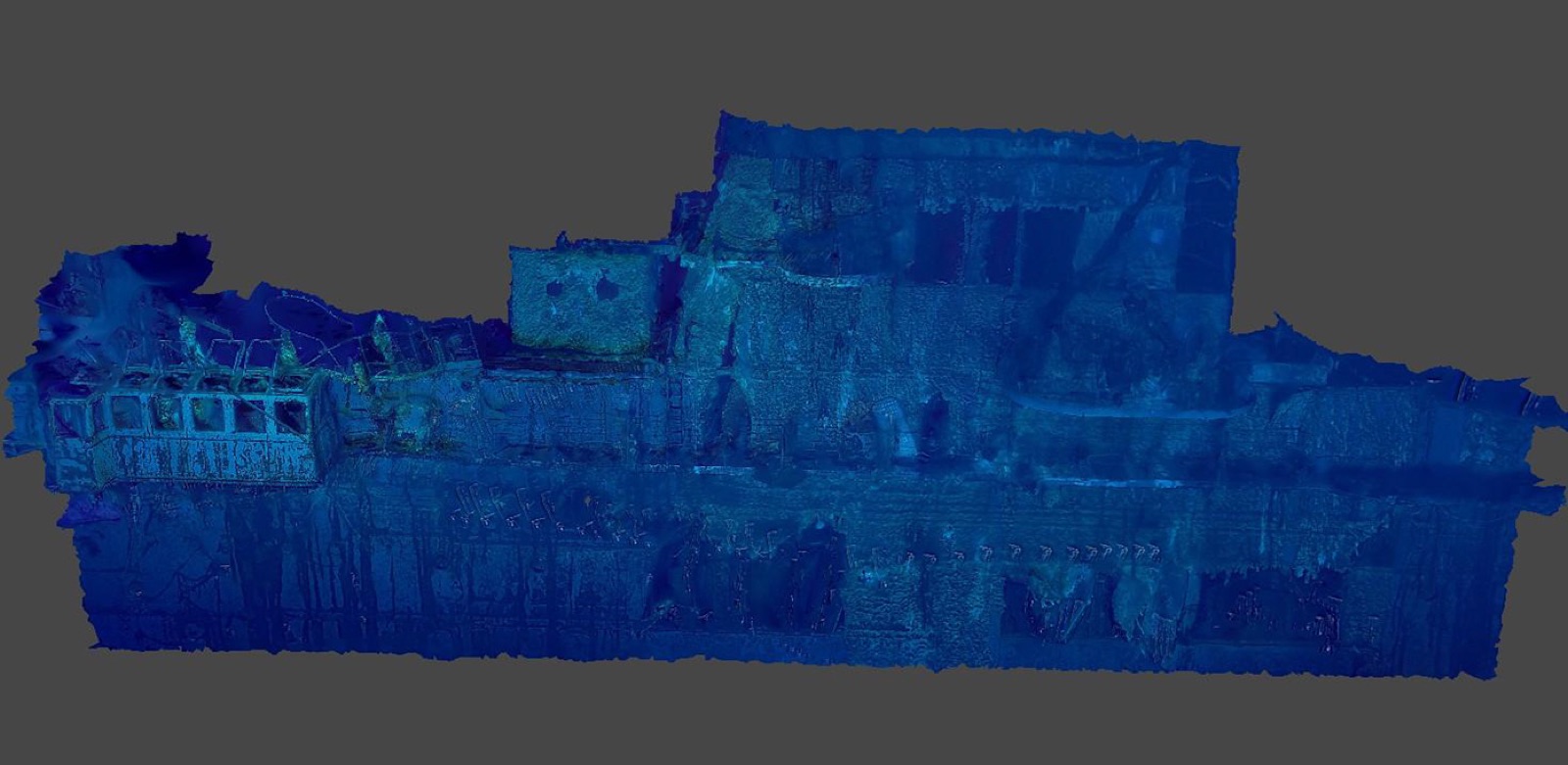
- Ship
- USS Yorktown (CV-5), aircraft carrier
- Captain
- Capt. Elliott Buckmaster
- Hit
- 3 bombs and 2 aerial torpedoes, 4 June 1942; 2 submarine torpedoes, 6 June
- Sank
- 7:01 a.m., 7 June 1942, about 62 hours after the order to abandon
- Where
- Open Pacific north of Midway Atoll
- Depth
- About three miles
- Lost
- 141 of her officers and men at Midway
- Found
- 19 May 1998, by Robert Ballard; filmed again by NOAA in April 2025
How did the Yorktown survive three bombs on 4 June 1942?
In the video at 1:20The Yorktown came to Midway with a bomb hole from the Coral Sea still in her. The yard at Pearl Harbor had given her about 48 hours in dry dock. That was the first time her crew saved her.
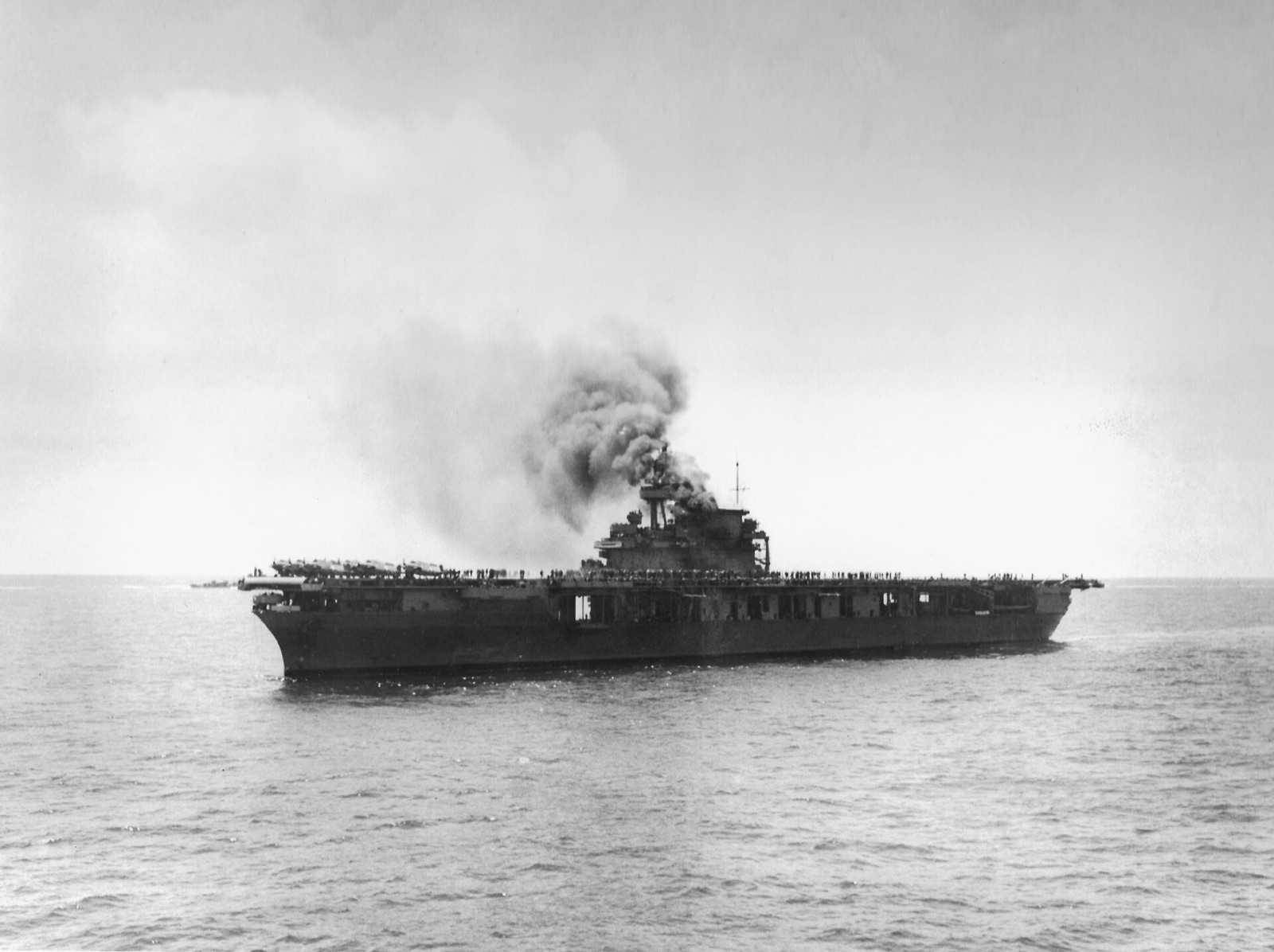
The second time was the afternoon of 4 June. Japanese dive bombers hit her three times. The first bomb landed near the number two elevator, killed and wounded the crews of two anti-aircraft mounts, and set a fire on the hangar deck, which her crew put out. The second went off inside her stack and tore open the uptakes from her boilers. Within twenty minutes she was down to six knots, and at about 2:40 p.m. every engine stopped. The third went down through the number one elevator and started a fire in a rag storeroom beside her gasoline stowage and a magazine. That fire would still be burning two days later.
Then her engineers went to work. Her captain's report gives the times: engines ahead at 3:40 p.m., ready for twenty knots at 3:50, making nineteen knots by four o'clock. She went from stopped to steaming in about eighty minutes.
Why did the Yorktown list 26 degrees?
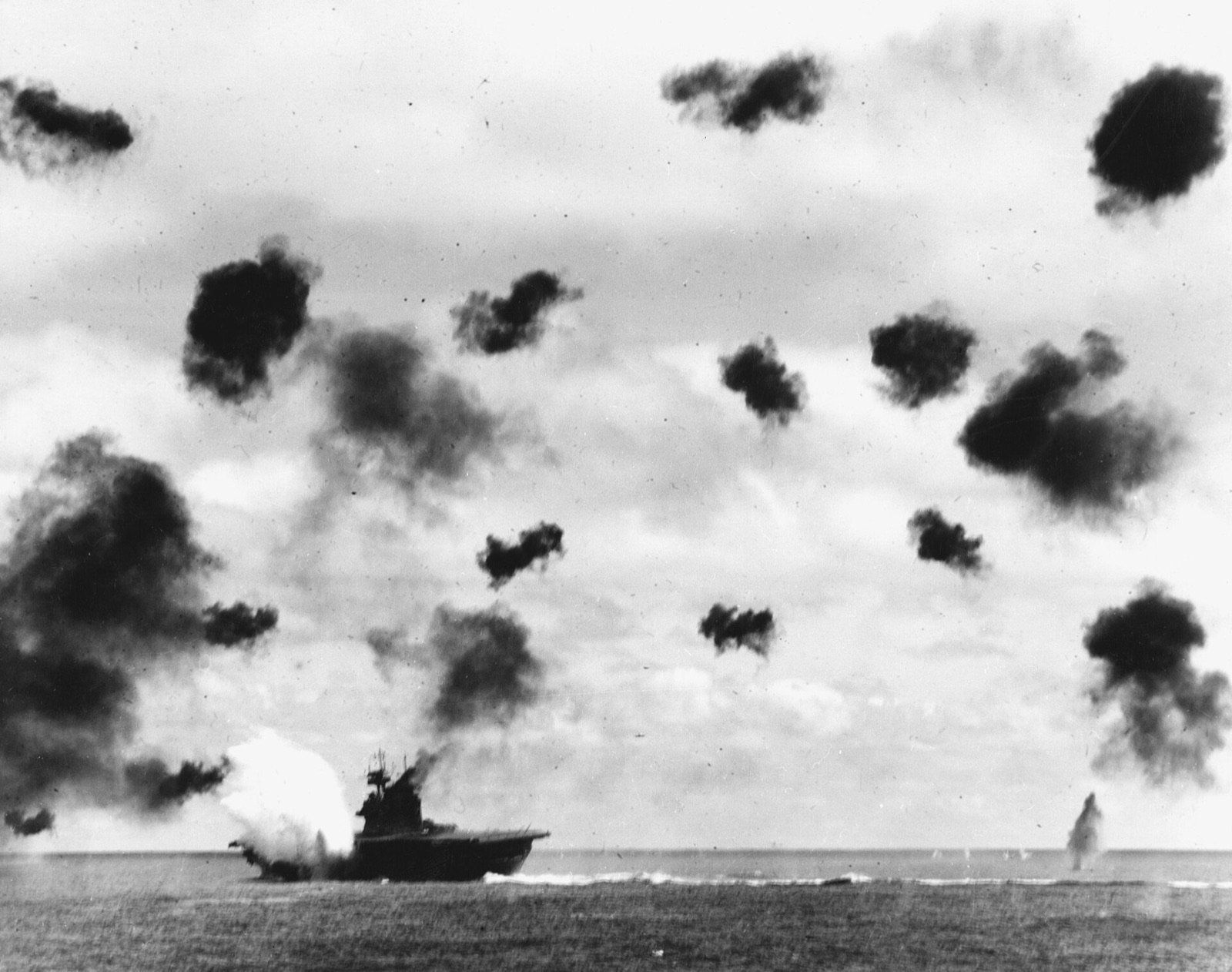
In the video at 2:46She had about twenty minutes of it. At about 4:20 p.m. torpedo planes from the carrier Hiryu put two aerial torpedoes into her port side, at frames 90 and 75, some thirty seconds apart.
Those two hits did what the bombs had not. The lights went out. The rudder jammed fifteen degrees left. Steam pressure fell away, and without steam there were no generators, and without generators there were no pumps. She could not pump the water out, and she could not flood the other side to balance it. She could only lean. The list passed twenty degrees and reached twenty-six, still increasing.
Why did Captain Buckmaster abandon ship?
In the video at 4:29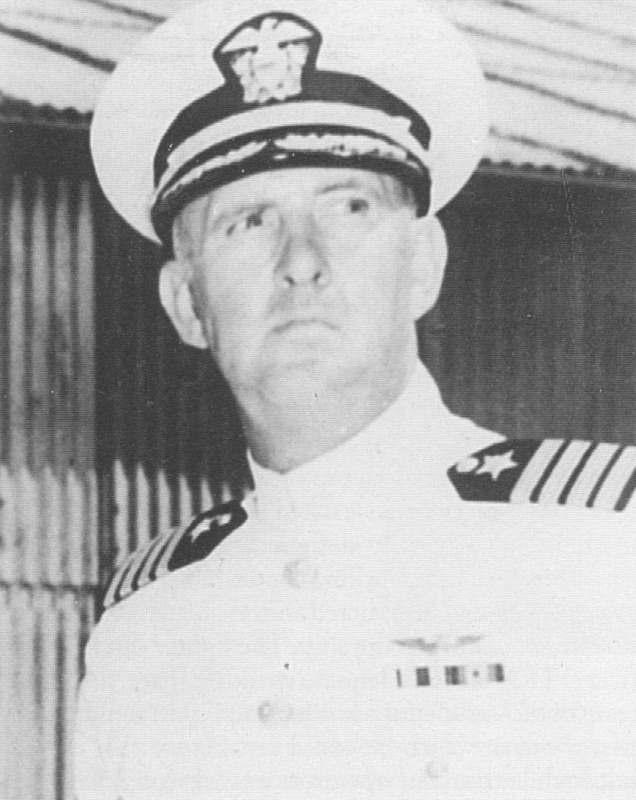
Captain Elliott Buckmaster and his damage control officer, Commander Aldrich, came to the same judgment: with no power there was nothing to be done, and she would capsize within minutes. More than two thousand men were aboard, most of them below decks in the dark. Six months earlier the battleship Oklahoma had rolled over at Pearl Harbor with her crew trapped inside.
"In order to save as many of the ship's company as possible, the Commanding Officer ordered the ship to be abandoned."
Capt. Buckmaster, loss report of the Yorktown, 18 June 1942
The crew went down knotted lines into the oil, the wounded first, and destroyers closed in to pick them up. Her secret and confidential files were left, in the report's words, "in the safes and vaults to go down with the ship." They are still inside her.
When every man in sight was off, the executive officer went down a line on the high, starboard side. Buckmaster then made one last walk through his darkened, listing ship, went aft, and lowered himself into the sea from the stern. The destroyer Hammann picked him up. His report gives that walk one sentence:
"On this inspection no live personnel were found."
Capt. Buckmaster, loss report of the Yorktown, 18 June 1942
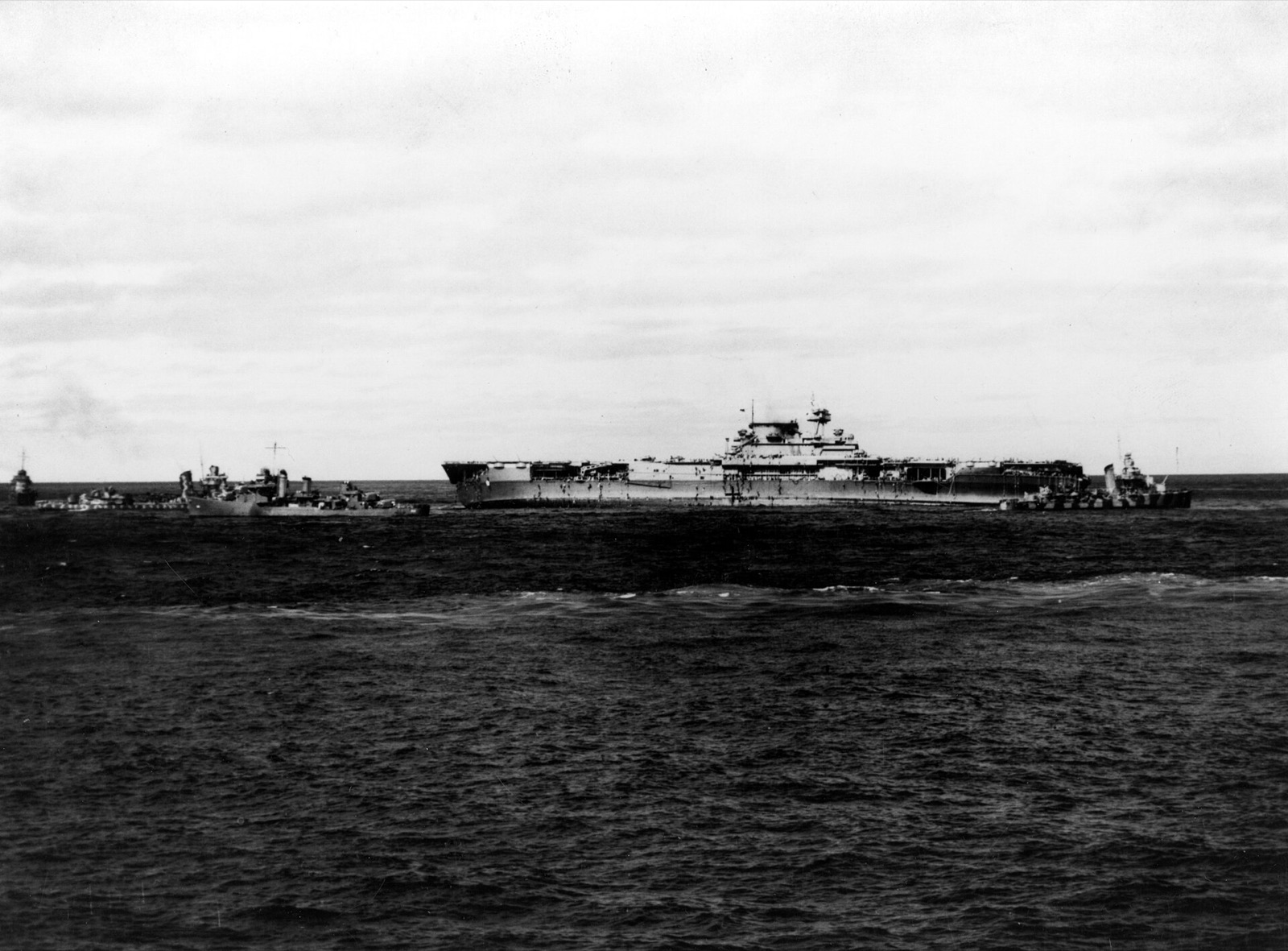
Who was still aboard the Yorktown?
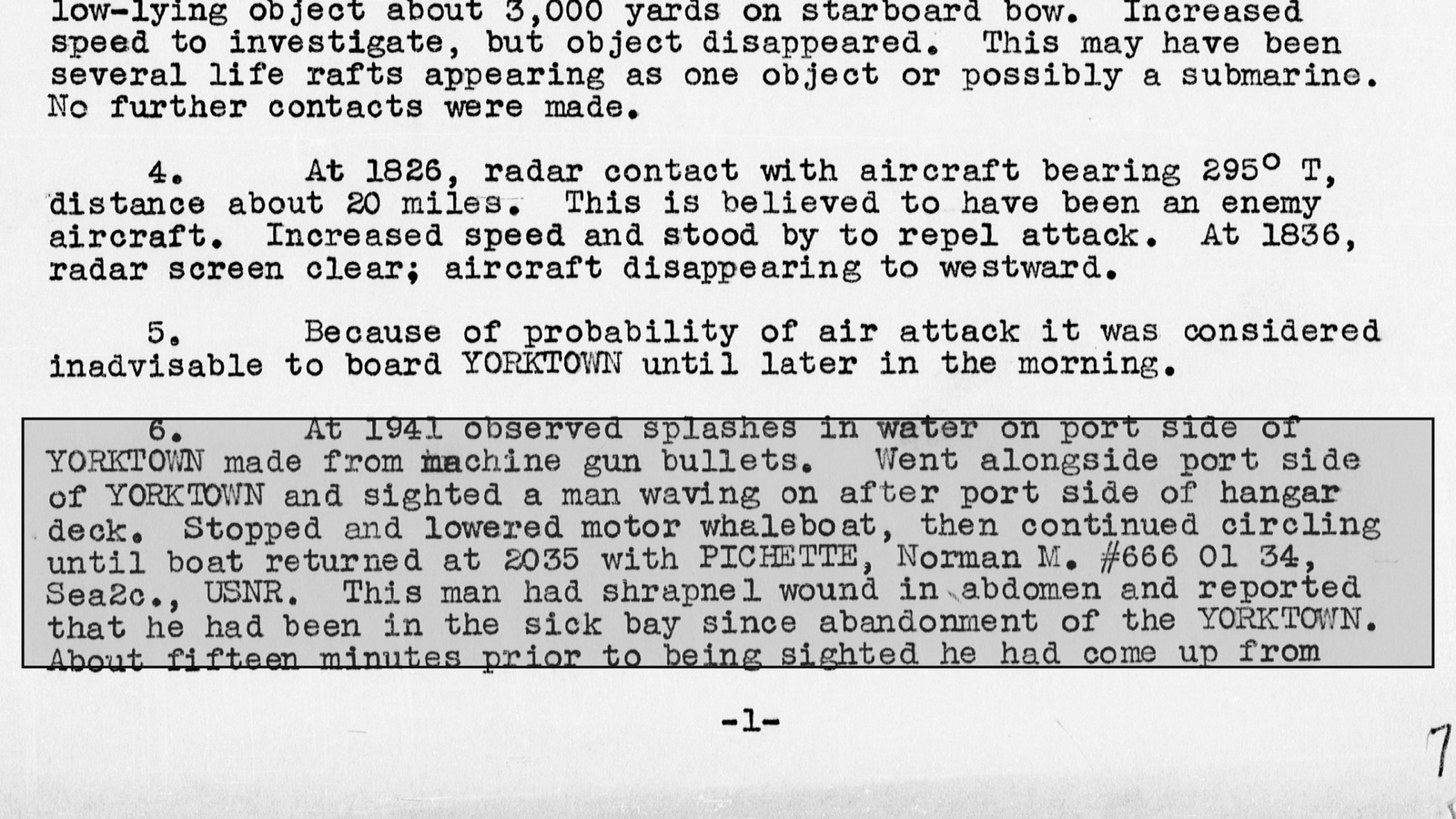
In the video at 6:03She did not roll over. Night came, and the task force moved east with her crew, leaving one destroyer, the Hughes, to guard her. The next morning the Hughes saw machine gun bullets splashing into the water along the carrier's port side, and a man waving from the after end of her hangar deck.
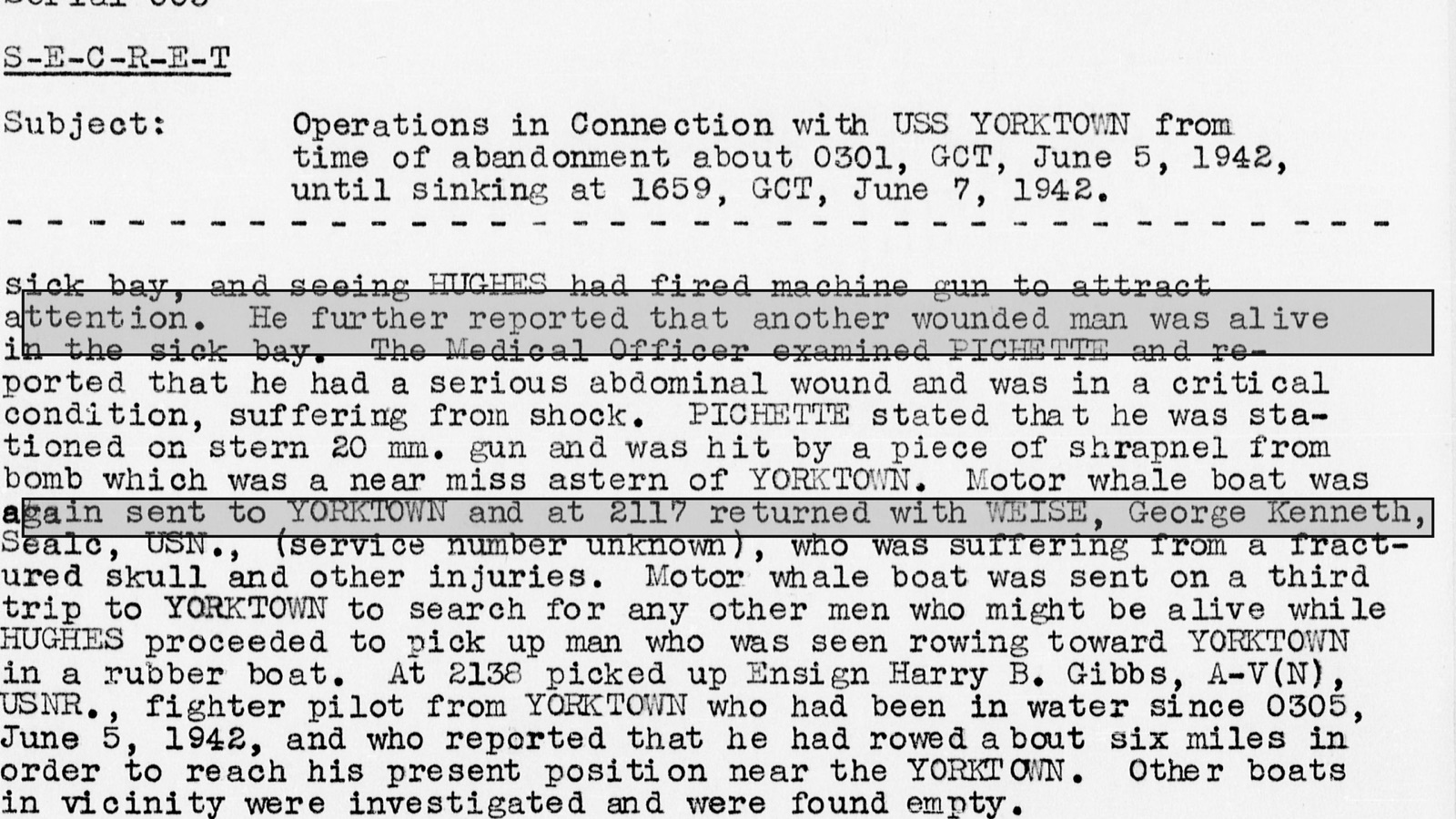
The Hughes sent a motor whaleboat across. Her own report names the man it brought back: Seaman Second Class Norman M. Pichette, U.S. Naval Reserve. He had a shrapnel wound in the abdomen from a near miss astern while he manned a 20-millimeter gun on the stern. He told them he had been in the sick bay since the ship was abandoned, had climbed up from it, and on seeing the Hughes had fired a machine gun to get her attention.
He also told them something else. Another wounded man was alive in the sick bay. The boat went back and returned with Seaman First Class George Kenneth Weise, who had a fractured skull. A third trip went back to search the carrier for anyone else still alive.
Pichette's wound was critical. He died after reaching the Hughes. George Weise survived. That same morning the Hughes also picked up Ensign Harry B. Gibbs, one of the Yorktown's fighter pilots, who had rowed about six miles in a rubber boat to get back to his carrier.
"Two wounded men who had been overlooked when the darkened ship was abandoned."
Naval War College, analysis of the Battle of Midway
Buckmaster's report of 18 June has no account of that morning, and neither man's name appears in it.
How long was the Yorktown left empty?
In the video at 7:54Most accounts make it sound like one continuous fight: abandoned, a salvage party goes back, a submarine sinks her. Look at the clock instead. The order to abandon went out late on the afternoon of 4 June. Her captain and his salvage party did not climb back aboard until first light on the 6th. For about a day and a half, one of the carriers that had just won the battle drifted with no one fighting her fire and no one pumping her out.
Help came slowly. The fleet tug Vireo, called in from Pearl and Hermes Reef, reached her around midday on the 5th and got a line on her that afternoon. Towing a flooded carrier with a jammed rudder, the tug made about three knots, then less. Pearl Harbor was more than a thousand miles away. The destroyer Gwin put a few men aboard that afternoon, but they could do little before dark. The rag storeroom fire burned on.
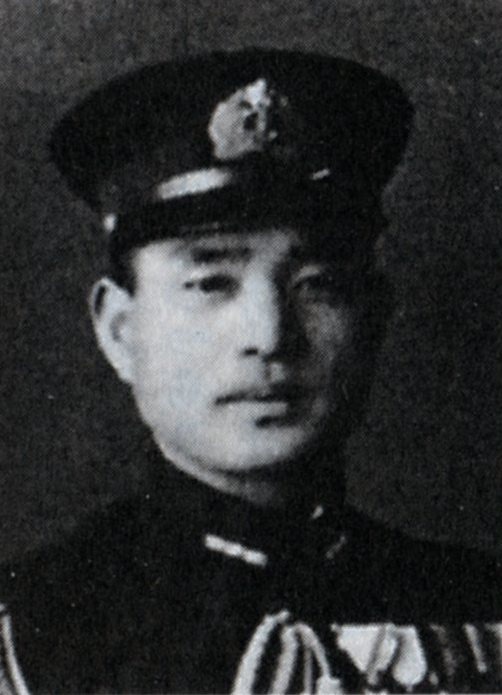
The other side was using the same day and a half. On the morning of the 5th a floatplane from the Japanese cruiser Chikuma found her, one carrier listing and adrift. The submarine I-168, which had spent the night shelling Midway, was ordered to find her and sink her. Her captain, Lieutenant Commander Yahachi Tanabe, had about 150 miles to cover.
Buckmaster, meanwhile, had picked a salvage party of 29 officers and 141 men. But they were spread among the rescue ships, which had gone east, and it was the early hours of the 6th before three destroyers brought them back. At about 4:10 a.m. on 6 June, I-168's lookouts sighted the Yorktown, twelve miles off. At about 4:15 the Hammann put Buckmaster and his men back aboard her.
What did the salvage party find, and why is a gun missing?
In the video at 10:25They found thirty-five of their own dead still aboard, and the rag storeroom still burning, some forty hours on. Then they did what the ship had needed on the 4th. The Hammann came alongside to starboard and gave the carrier what she had lost: power, pumps and water for the hoses. They put the fire out, pumped down the engine rooms, flooded tanks on the starboard side to pull her upright, and began cutting weight off the low side.
"One five-inch gun had been dropped overboard and another was practically ready for dropping."
Capt. Buckmaster, loss report of the Yorktown, 18 June 1942
That is why there is a gap on her port side today. No bomb or torpedo made it. Her own crew cut that gun loose to win back a few degrees. The aircraft on her port side went over the side too. By mid-afternoon it was working: the list had come back about two degrees.
At 3:36 p.m. lookouts saw four torpedo wakes coming in from the starboard beam. Tied alongside and feeding the carrier from her own machinery, the Hammann had nowhere to go. One torpedo broke her in two, and she sank in about four minutes. Her depth charges went off among the men in the water. Eighty-one of her 241 men died. Two more torpedoes hit the Yorktown low on the starboard side, and the fourth missed astern. Tanabe had been watching her for about nine hours.
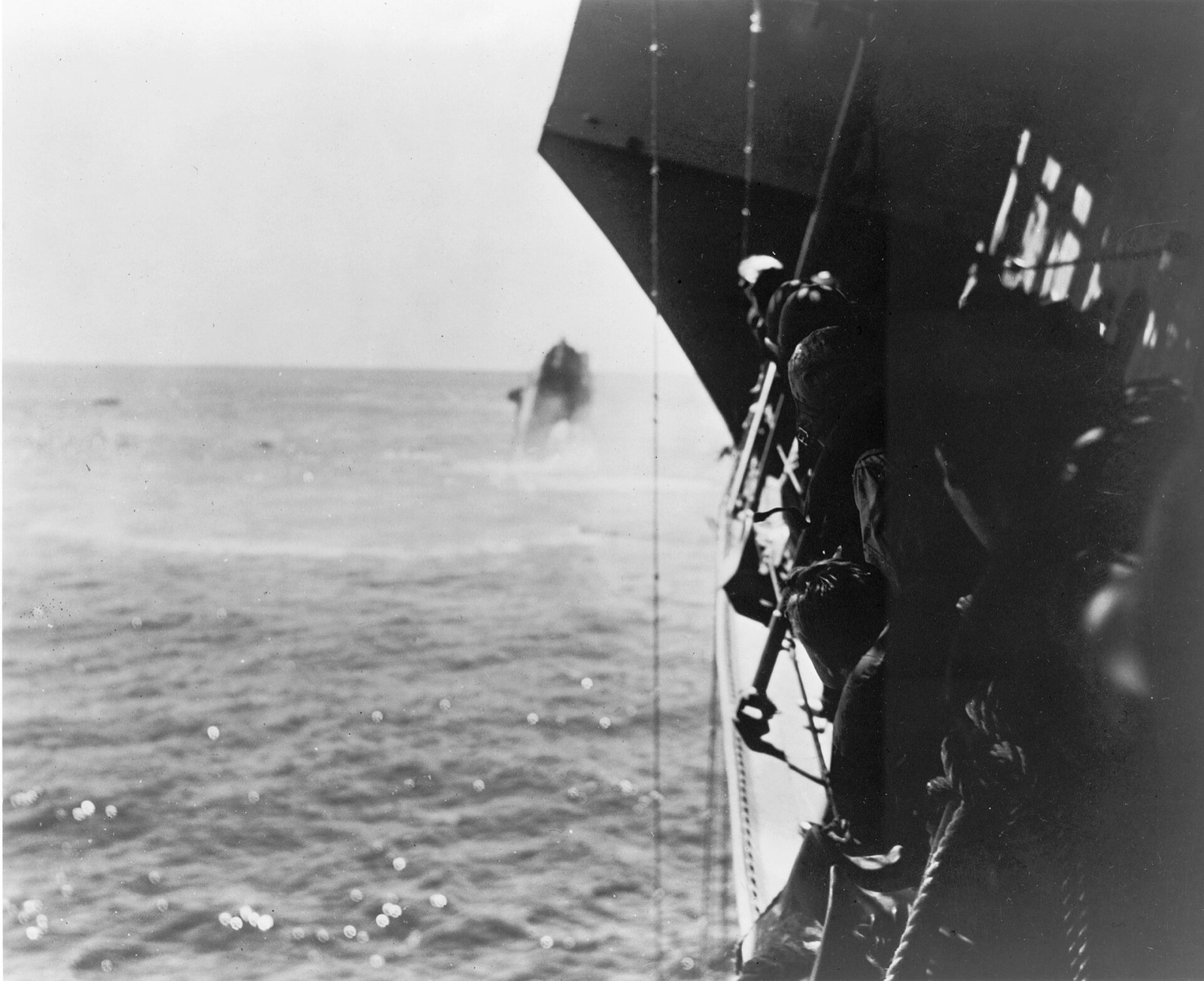
When did the Yorktown finally sink?
In the video at 13:45Even then she did not go. The new holes let the sea into her high side, and her list came back to about seventeen degrees. The salvage party was taken off for the night, still planning to board her a third time at dawn. She floated through the night. At about 5:30 a.m. on 7 June the destroyers saw her list growing fast, and at 7:01 she rolled over to port and sank, in her captain's words, "in about three thousand fathoms of water with all battle flags flying."
From the order to abandon her to the moment she went under was about sixty-two hours.
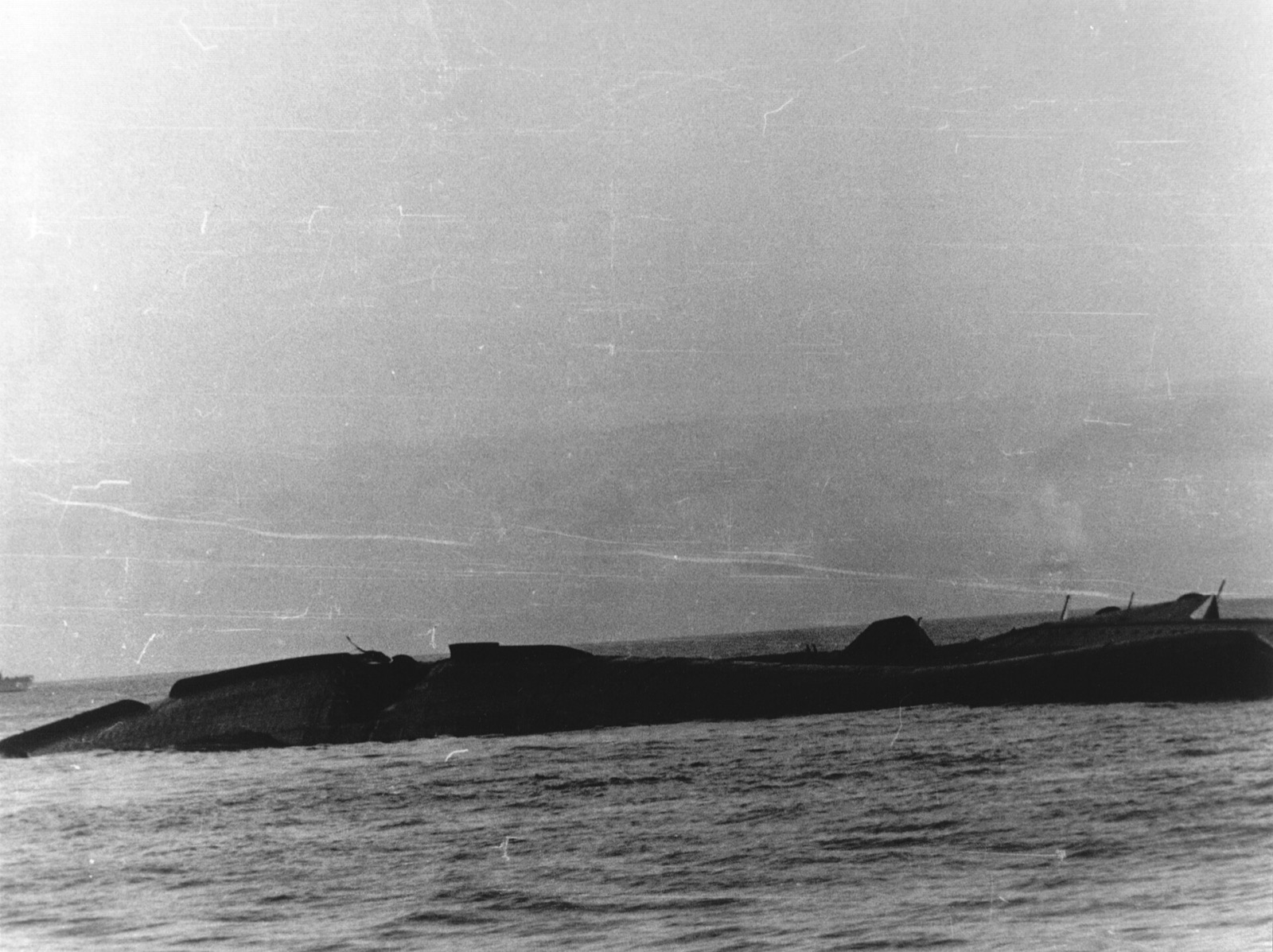
What is inside the Yorktown wreck today?
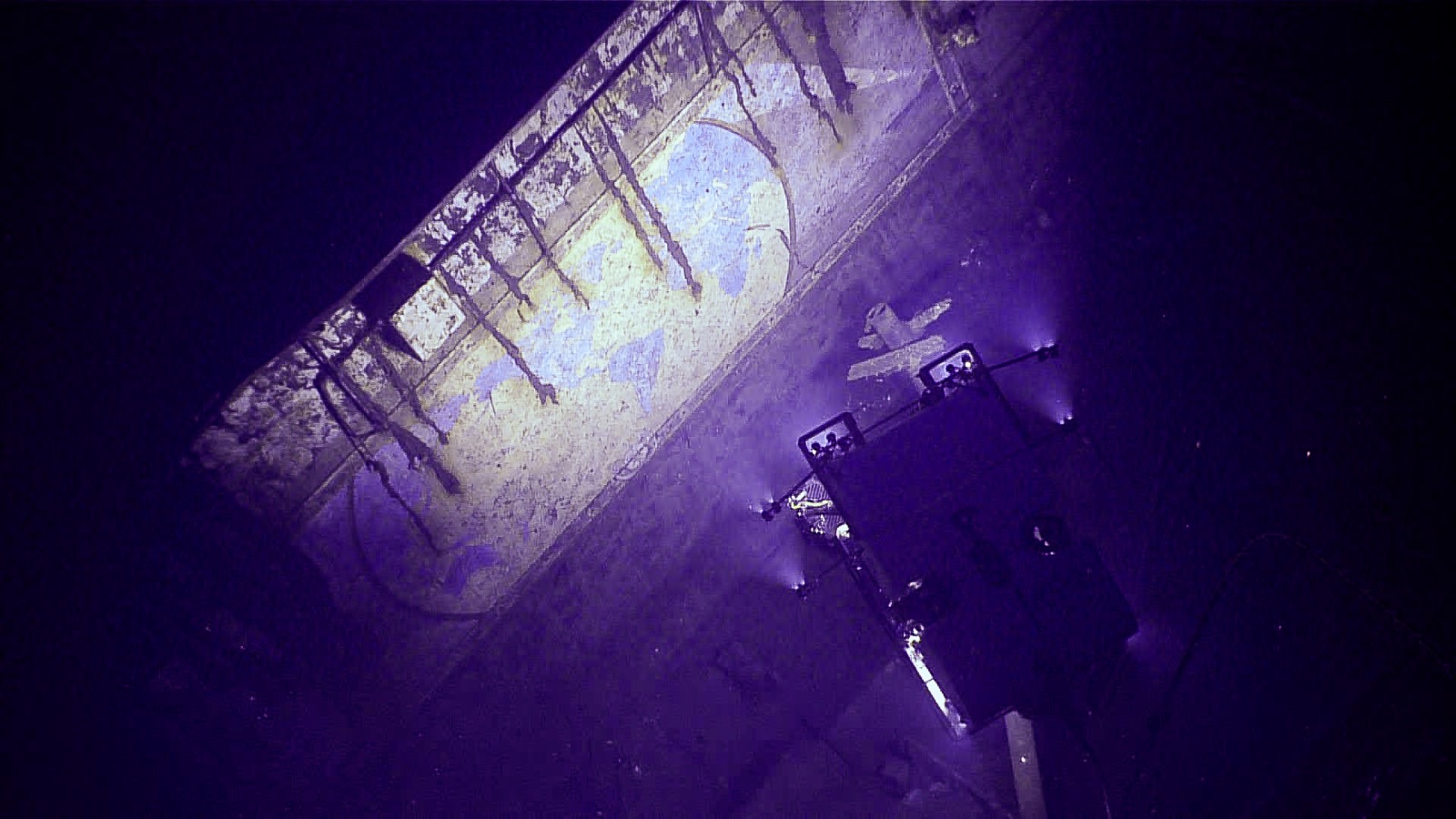
She capsized on the surface, but she is upright on the bottom: somewhere in three miles of falling she came back onto her keel. Robert Ballard's expedition found her that way on 19 May 1998. When NOAA's remotely operated vehicles went into her hangar in April 2025, they found a ship stopped in the middle of being saved.
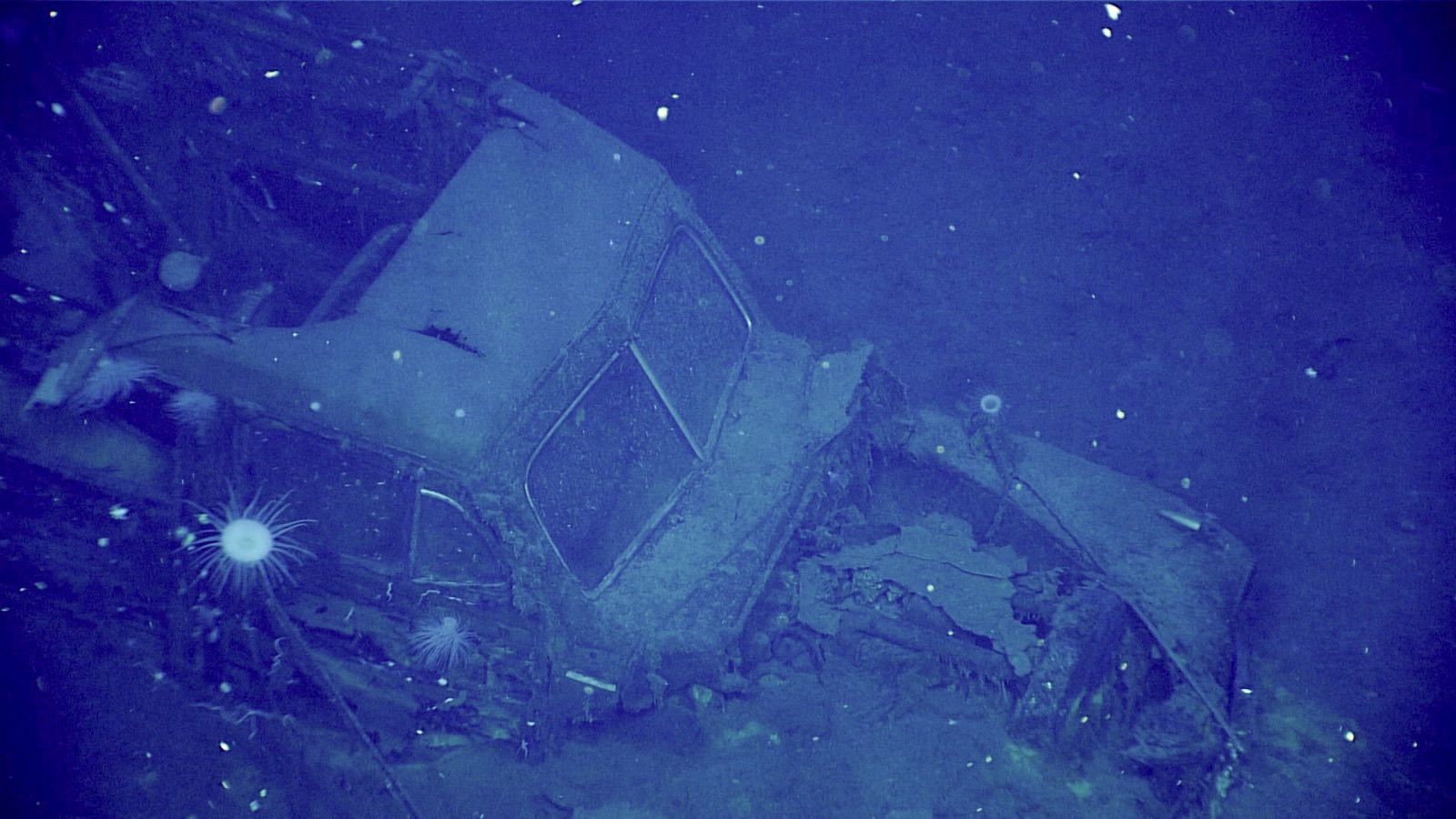
Aft on the hangar deck stands that black Ford station wagon. Nobody cut it loose, and the likely reason is plain: what rights a listing ship is weight taken from high up on the low side, and a car on the hangar deck was not worth a man's time. Near it are at least three Dauntless dive bombers. One lies upside down with its bomb still in the cradle, and two are believed to be Enterprise planes that landed aboard her on the 4th.
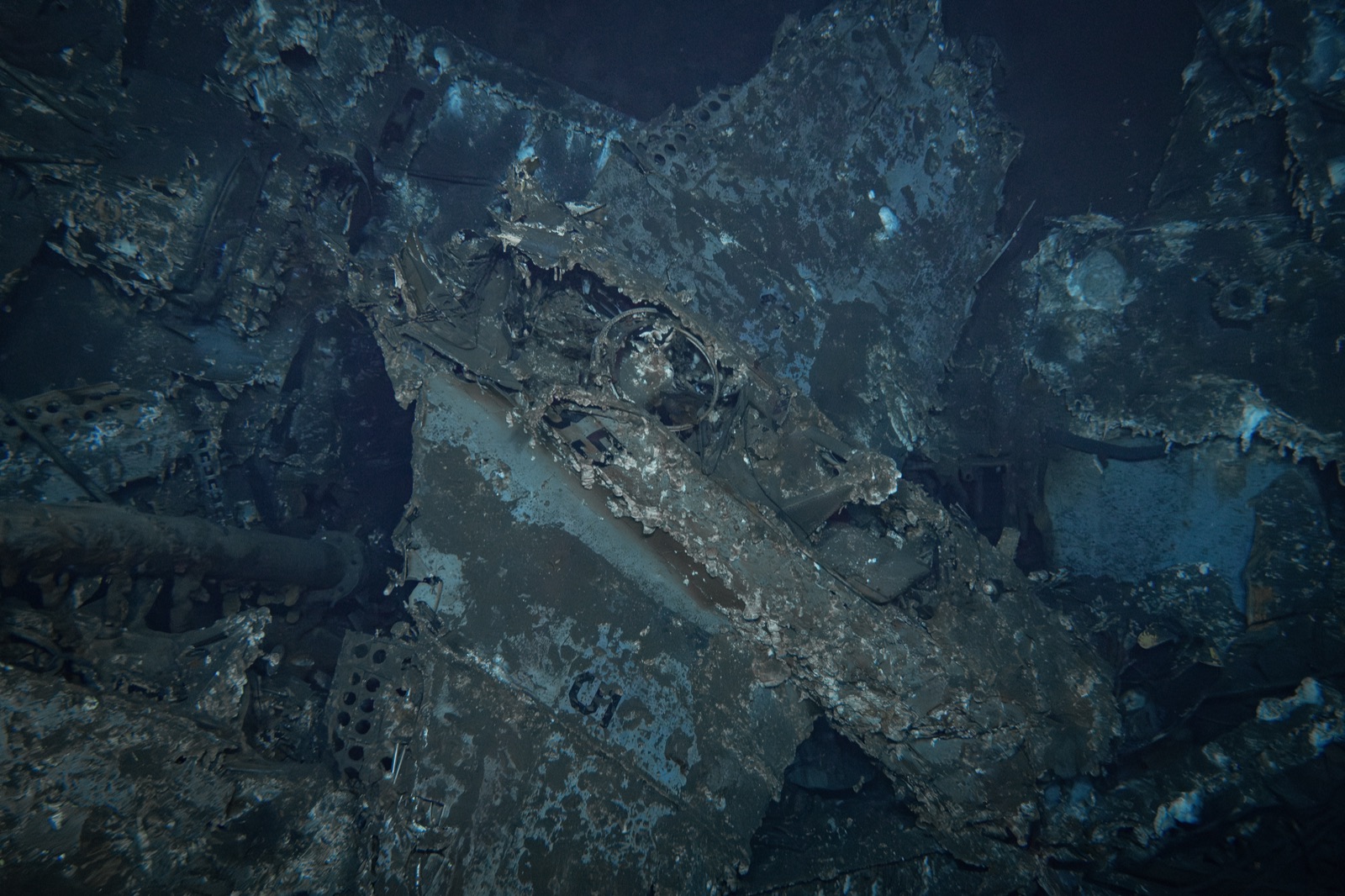
Inside an elevator shaft is a painted map about forty-two feet across and twelve feet high: "A Chart of the Cruises of the USS Yorktown," every place she had been, painted on a bulkhead by her own crew.
Did Captain Buckmaster abandon the Yorktown too early?
In the video at 15:04Two sides of the call
The case against
She did not capsize in minutes. She stayed up for about sixty-two hours. For a day and a half nobody was aboard to fight for her, and a day and a half was what a submarine needed to find her. When men did go back, with one destroyer's power, they had the fire out and the list coming off within hours. Some historians have called the order premature.
The case for
On the 4th he had no destroyer alongside with power. He had a dark ship at twenty-six degrees and still moving, a damage control officer saying nothing could be done, and more than two thousand men aboard, most of them below. Had she gone over like the Oklahoma, the Navy would have lost the ship and the crew. As it was, it lost the ship.
When she stayed afloat, Buckmaster went back aboard her himself, and he was aboard when the torpedoes came. The two men in the sick bay argue both sides at once: he left them, and he could not have found them in a darkened ship that size in the time he believed he had.
The Navy gave its own answer. Buckmaster was promoted to rear admiral and became the first Chief of Naval Air Primary Training, running the schools that trained pilots for the carriers that came after. In 1945 he commanded the Western Carolines, and in August that year his command ran the shore side of the rescue of the Indianapolis survivors. He retired a vice admiral in 1946 and died in Coronado, California, in 1976, at 86.
A hundred and forty-one of the Yorktown's officers and men died at Midway. More than two thousand did not.
Watch the full story
18 minutes: the sea drained away in a 3D model, NOAA's footage from inside the wreck, and the Navy's own reports, read against each other.
If the player does not load, watch it on YouTube.
Did your father or grandfather serve on the Yorktown, or at Midway? Did you serve on a carrier yourself? Tell us his name, or yours, and the ship in the video's comments. We read every one.
Coming soon from Reported Aboard
What did Dad do in the Navy?
A large-print guide to reading your father's or grandfather's World War II Navy papers, uniform and keepsakes: his discharge paper line by line, his rating badge and stripes, and what the things he kept really were. Printed paperback and instant download.
Sources
- Capt. Elliott Buckmaster, report on the loss of the USS Yorktown, 18 June 1942. HyperWar transcription.
- USS Hughes (DD-410), report of operations with the USS Yorktown from her abandonment to her sinking, June 1942; Pacific Fleet reports file. U.S. National Archives.
- Naval War College, The Battle of Midway, chapter "End of the Yorktown." HyperWar transcription.
- Dictionary of American Naval Fighting Ships, "Yorktown (CV-5)." HyperWar transcription.
- The fates of Norman Pichette and George Weise: the recollection of a Hughes crewman. yorktownsailor.com.
- Japanese submarine I-168 (Chikuma's sighting, the shelling of Midway, the 4:10 a.m. sighting, Hammann's losses). Wikipedia.
- Elliott Buckmaster, career and later commands. Wikipedia.
- NOAA Ocean Exploration, USS Yorktown (CV-5) 2025 dives and photogrammetry. oceanexplorer.noaa.gov.
- "Sunken USS Yorktown leaves researchers flabbergasted in latest dive," Military Times, 12 May 2025. militarytimes.com.
Questions people ask
Where is the wreck of the USS Yorktown?
In the open Pacific north of Midway Atoll, about three miles down. Robert Ballard's expedition found her upright on the bottom on 19 May 1998. NOAA filmed her again, inside and out, in April 2025.
Was anyone left aboard when the Yorktown was abandoned?
Yes, two wounded men in her sick bay: Seaman Second Class Norman M. Pichette and Seaman First Class George K. Weise. The next morning Pichette fired a machine gun to signal the destroyer Hughes, and both were taken off. Pichette died of his wound; Weise survived.
What sank the USS Yorktown?
Two torpedoes from the Japanese submarine I-168 on the afternoon of 6 June 1942, after three bombs and two aerial torpedoes on 4 June. She sank at 7:01 a.m. on 7 June.
Is there really a car on the Yorktown wreck?
Yes. NOAA's 2025 dives filmed a black Ford wood-bodied station wagon on her hangar deck, its front plate reading "Ship Service, Navy."
Has the destroyer Hammann been found?
No find has been reported as of this writing. Two of the four Japanese carriers sunk at Midway, the Kaga and the Akagi, were found in 2019. The Soryu, the carrier the Yorktown's own dive bombers sank, and the Hiryu have not been reported found.
How deep is the Yorktown?
About three miles. Published figures and depth maps of the site do not agree on an exact number of feet, so we give the round figure.